
Introduction
Career planning is not a one-time decision but rather an ongoing process that changes along with your abilities, interests, and opportunities. It allows both students and professionals to remain proactive, flexible, and in line with their personal development and professional goals. It means taking deliberate steps today while still having the option to change for tomorrow.
What Is Career Planning and Why Is It Important?
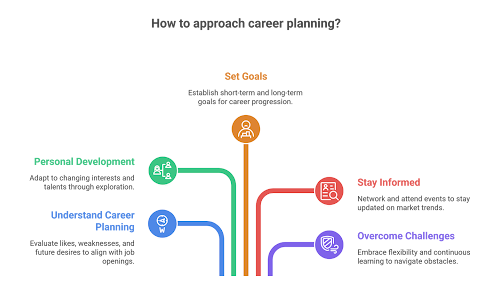
Career planning is the systematic method of evaluating your likes, weaknesses, and strengths, future desires, and afterward correlating them with job openings. It requires a lot of self-examination, a lot of thinking about different routes, and frequent reviewing of the aims. It is not a permanent plan but a flexible process that evolves along with your learning, competencies, and life experiences.
According to AISHE, the Gross Enrolment Ratio (GER) has reached 27.3%, indicating a gradual shift from school to higher educational institutions, where the importance of informed career planning is crucial.
How Do Personal Development and Changing Preferences Influence Career Choices?
It is a natural process that a student’s interests and talents will change during development and exposure to different things. A student who started education with a desire to become an architect may end up being an eco-friendly designer after doing some hands-on projects. Likewise, a person who was all set to be an engineer might suddenly get interested in data science or AI. Career planning is a good way of helping people to adapt to such changes rather than insisting on one way only.
Main points to consider:
- Evaluating the objectives from time to time to see the changes in interests and strengths
- Trying different fields through seminars, practical training, and projects
- Choosing careers that are in line with the changing personal and professional values
Why Is It Important to Reassess Interests, Strengths, and Goals Over Time?
Career planning involves setting up clear goals for both the short and long term.
Some goals for the short term could be:
- To find and take part in relevant internships or gain certificates
- To master the most required skills of your selected industry
- To be engaged in projects or competitions to acquire experience
The expectancy from the long-term is:
- To be hired by the top company in the industry
- To build a career that is not only a source of growth for you but also very satisfying
- To reach professional goals that keep changing as you develop new aspirations
For example, students from the RV College of Engineering placements mostly choose internships and projects that can help them achieve their career goals. The case of BMS College of Architecture placements and MS Ramaiah Institute of Technology placements also indicates that a lack of proper planning and persistence will result in career failure.
How Can Students Stay Informed About Career Opportunities and Market Trends?
The employment market is in a constant state of flux, making it necessary to stay updated, as good career planning for students is the only way out.
The following are some of the ways to keep yourself updated:
- Networking with industry professionals, alumni, and mentors
- Attending seminars, webinars, and workshops
- Enroll in online courses or get certified
- Using career counseling platforms like EduDunia
The Ministry of Education, in collaboration with NCERT, launched the “My Career Advisor” digital platform, which provides structured guidance on over 1,500 career options aligned with the National Curriculum Framework. Being aware of the market trends and opportunities will ensure that you will be able to adapt and make career-related decisions that align with your goals in no time.
What Are the Common Challenges in Career Planning and How Can They Be Overcome?
Although career planning is very important, it has its shortcomings, such as the unpredictability of the job market, the lack of required skills, and the competition from other equally qualified candidates. Overcoming these challenges requires:
- Strong will and flexibility to embrace changes in one’s career.
- Continuous learning and acquiring new skills.
- Gaining experience through internships, voluntary work, or part-time jobs.
- Regularly reviewing and adjusting your career plan to make sure it aligns with your personal and professional development.
Conclusion
Career planning is an unceasing process of contemplation, acquiring knowledge, and making necessary changes. EduDunia is a one-stop platform that offers students complete help, resources, and tools for the smooth navigation through the career planning process. We start with making informed decisions for the students by exploring the career options and identifying the strength, followed by suggesting the courses and internships that suit them the best. Visit our official website for more information.
FAQs
1. What makes career planning an ongoing process rather than a one-time decision?
Interests, skills, and market opportunities will change over time, which will necessitate continuous reevaluation.
2. How often should I review my career goals?
Every 6-12 months or at the time of major personal or professional changes.
3. How can I keep myself informed about career opportunities?
By networking, online courses, workshops, and using platforms like EduDunia.
4. Is continuous learning necessary for career planning?
Definitely, it keeps you up-to-date and not only enhances skills but also provides you with the ability to compete in the market.
5. Can internships or part-time jobs affect career planning?
Absolutely no doubt about it. They provide practical training, assist in interest discovery, and increase the person’s employability.